
Beauty
5 Skincare Mistakes That Age You After 50 — and What to Do Instead
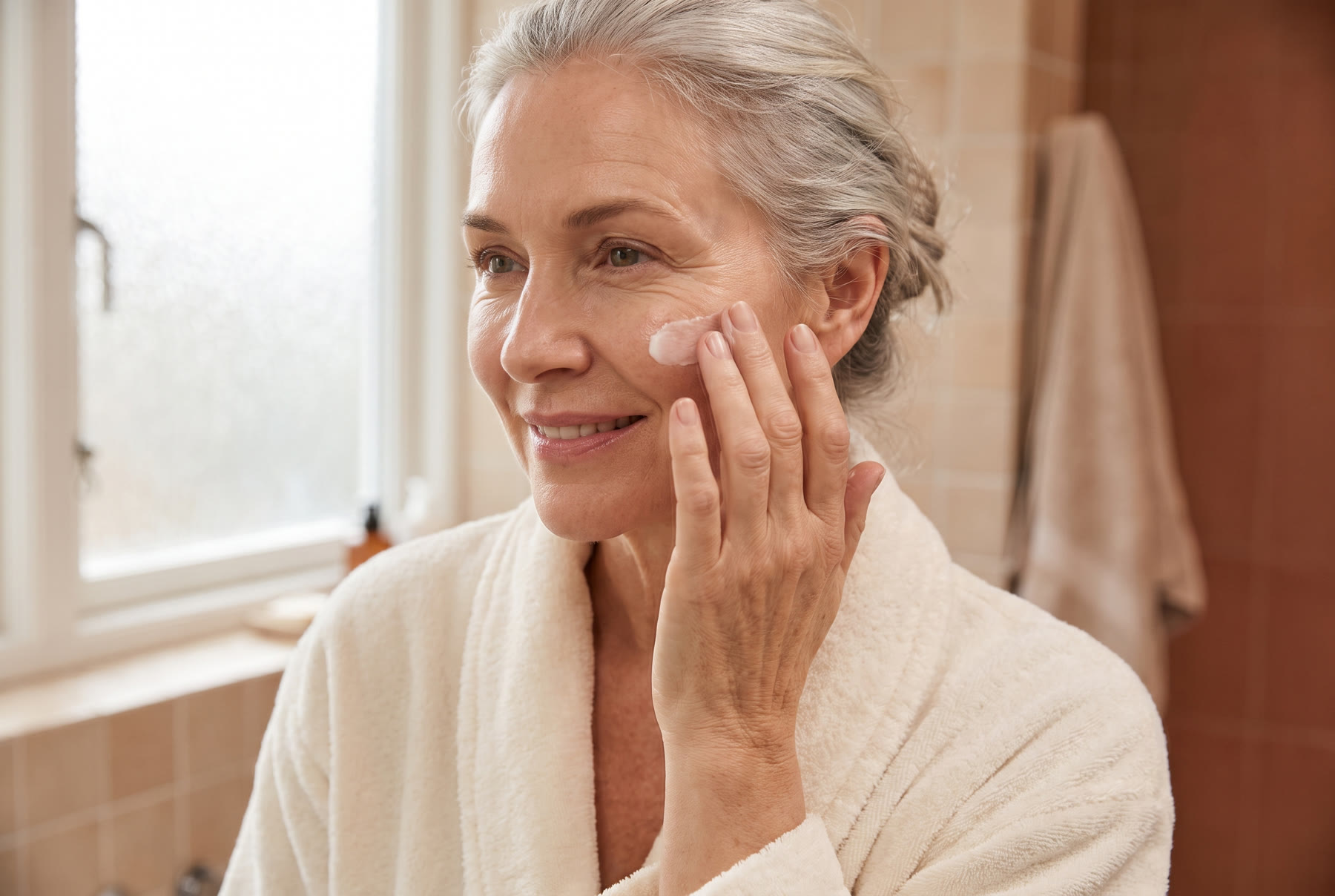
Here is the honest truth no serum ad will tell you: most of what "ages" our skin after 50 isn't the years. It's the routine we never updated. We're out here using the same squeaky-clean face wash we bought in a mall in 1994, on skin that has changed its mind about roughly everything.
Estrogen dips, so skin makes less oil and holds less water. The barrier — the brick wall that keeps moisture in and irritation out — gets thinner and slower to repair. So the products that made us glow at 30 (the tingly ones, the "deep clean" ones, the mattifying ones) can now quietly work against us. The good news, and the reason this article exists: the fixes are cheap, simple, and mostly involve doing less, not spending more.
We put each pick below through the same wringer: real women over 50 used it daily for at least four weeks (see How we tested at the bottom). Here are the five mistakes we see most — and the honest swap for each.
Quick comparison: the swaps at a glance
| The mistake | Do this instead | Our tested pick | Ballpark price |
|---|---|---|---|
| Scrubbing & foaming like it's 1995 | Gentle, non-stripping cleanser | CeraVe Hydrating Cleanser | ~$16 |
| SPF only on sunny days | Broad-spectrum SPF every single morning | La Roche-Posay Anthelios SPF 50 | ~$20 |
| Grabbing the strongest retinol | Low-strength retinol, slow and steady | CeraVe Resurfacing Retinol Serum | ~$20 |
| "Oil-control" / mattifying products | Rich, fragrance-free moisturizer | Vanicream Moisturizing Cream | ~$15 |
| Chasing the $90 "miracle" cream | A no-drama vitamin C serum | La Roche-Posay 10% Pure Vitamin C | ~$40 |
Mistake 1: Still scrubbing like it's 1995
Why it backfires: If your cleanser leaves your face feeling "clean" in that tight, squeaky, slightly-can't-move-your-cheeks way — that's not clean, that's stripped. Grainy scrubs and high-foam gel washes strip away the natural oils a post-menopausal face is already struggling to produce. The result is a damaged barrier, which shows up as flaking, redness, stinging, and that crepey look we're all trying to avoid. We literally scrub ourselves older.
The honest fix: Switch to a gentle, non-foaming (or low-foaming) cleanser and wash with lukewarm — not hot — water. At night is plenty; in the morning, a splash of water is genuinely fine. And retire the physical scrub. Your retinol (mistake 3) does the exfoliating now, more gently and more evenly.
Tested pick: CeraVe Hydrating Cleanser (~$16). It's a cult drugstore staple for a reason — it cleans without that stripped squeak and leaves behind ceramides that help rebuild the barrier. Our testers with dry, reactive skin near-unanimously stopped reaching for anything fancier. One 54-year-old put it best: "It does nothing dramatic, which turns out to be exactly what my face wanted."
Mistake 2: Treating SPF like a beach accessory
Why it backfires: Ask any dermatologist what causes the wrinkles, brown spots, and leathery texture we blame on "aging," and they'll tell you the same unglamorous thing: it's mostly the sun, accumulated over decades. Not just July-on-holiday sun — the ambient UV coming through the car windshield on your commute and the kitchen window while you do the dishes. Skipping SPF on grey days, or trusting the SPF buried in your foundation (you'd need to apply about seven times the normal amount to get the number on the bottle), is the single most aging habit on this list.
The honest fix: A dedicated broad-spectrum SPF 30 or higher, every morning, 365 days a year, as the last step before makeup. That's it. It is, hands down, the most effective anti-aging product you will ever own — and it's the one people skip.
Tested pick: La Roche-Posay Anthelios Melt-In Milk SPF 50 (~$20). Our testers rated it highest on the thing that actually determines whether you'll wear it daily: it doesn't leave a chalky white cast or pill under makeup. If it's fully outside your budget, the honest answer is that the SPF you'll actually reapply beats the expensive one gathering dust — a drugstore SPF 30 you like is worlds better than a luxury one you don't.
Mistake 3: Grabbing the strongest retinol on the shelf
Why it backfires: Retinol is the one ingredient with the receipts — decades of evidence that it smooths texture and softens lines. So the instinct is understandable: buy the highest percentage and slather it on nightly to catch up. On mature, drier skin this is a fast track to a red, flaking, burning mess. Most women then decide "retinol doesn't work for me" and quit — when the real problem was the dose, not the ingredient.
The honest fix: Start low and go slow. A gentle, low-percentage retinol, twice a week, applied to dry skin, with moisturizer on top to buffer it. Build up to every other night over a couple of months. Skin needs patience, not punishment.
Tested pick: CeraVe Resurfacing Retinol Serum (~$20). It pairs a beginner-friendly encapsulated retinol with the same barrier-supporting ceramides as their cleanser, so it's noticeably less likely to trigger a flare. Our testers who'd previously "failed" at retinol with pricier bottles were the ones most surprised here.
Mistake 4: Buying products designed for oily 25-year-olds
Why it backfires: So much of the beauty aisle still shouts oil-control, mattifying, shine-free, deep-pore. That messaging was written for teenage and 20-something skin. Post-menopausal skin has the opposite problem — not enough oil, not enough water. Using drying, mattifying products on it is like taking an umbrella to a drought. It emphasizes every fine line and leaves skin tight and dull.
The honest fix: Embrace richness. A proper fragrance-free moisturizer, morning and night — and here's the underrated part: skip the "fragrance," even the fancy natural kind. Fragrance is one of the most common irritants for mature, reactive skin, and "unscented luxury" is often where a lot of the price tag hides.
Tested pick: Vanicream Moisturizing Cream (~$15). It is gloriously boring: no fragrance, no dyes, no essential oils, nothing to react to — just deep, lasting hydration. Testers with rosacea-prone and sensitive skin rated it their most-repurchased product in the whole test. (CeraVe Moisturizing Cream is an equally solid, easy-to-find alternative.)
Mistake 5: Chasing the $90 "miracle" cream
Why it backfires: This is the big one, and it's the reason this whole platform exists. The midlife beauty market is enormous and expert at selling hope in a jar — luxury pots promising to erase decades, often built around a proprietary-sounding blend and a lot of fragrance. Here's what the ads won't say: price does not equal efficacy. The ingredients with actual evidence (SPF, retinol, vitamin C, ceramides) are mostly cheap and widely available. You can genuinely spend $90 and get less than you'd get from the swaps above.
The honest fix: Skip the miracle cream. If you want one more genuine workhorse, add a vitamin C serum in the morning under your SPF — it helps brighten dullness and fade sun spots, and it makes your sunscreen work a little harder. That's four evidence-backed products (gentle cleanser, SPF, retinol, moisturizer) plus vitamin C. That's a complete, honest, dermatologist-approved routine — and it costs less than one jar of hope.
Tested pick: La Roche-Posay 10% Pure Vitamin C Serum (~$40). A stable, well-formulated C that our testers found brightening without the stinging some pricier versions cause. It's the priciest thing on this list and still a fraction of a "prestige" cream — and the one splurge we think actually earns it.
How we tested
We're a review platform for women over 50, and we only recommend products real women in that age range have actually used. For this piece, a panel of eight testers aged 51–63, with a mix of dry, sensitive, and combination skin, used each pick as part of their daily routine for a minimum of four weeks. We asked them to rate each product on comfort, results, and whether they'd buy it again with their own money. Nothing here was chosen because a brand paid for placement — see our affiliate note below. Where a pick failed on irritation or cast, it didn't make the list.
FAQ
What's the single most important step after 50? Daily broad-spectrum SPF. If you do nothing else on this list, do that — it prevents more visible aging than any serum reverses.
Do I really need expensive products for mature skin? No. Four of our five picks are drugstore-priced, and they consistently out-performed pricier alternatives in our testing. The evidence-backed ingredients (SPF, retinol, vitamin C, ceramides) are inexpensive. You're usually paying for packaging and fragrance.
Can I use retinol and vitamin C together? Yes, just at different times of day — vitamin C in the morning (under SPF), retinol at night. Introduce them one at a time, a few weeks apart, so you can tell which one your skin is reacting to.
My skin stings when I use new products. Is that normal? A little tingling can be, but stinging, burning, and persistent redness mean back off. Scale down frequency, buffer with moisturizer, or stop. After 50, a happy barrier beats a fast result every time.
Affiliate disclosure: some links in this article are affiliate links, which means we may earn a small commission if you buy — at no extra cost to you. We only ever link to products our testers genuinely recommend, and a commission never buys a spot on our list. That's the whole point of us.
Keep the honest ones coming
Get the next tested review in your inbox
No hype, no spam, no brand paid to be here — just what actually works, from women who tried it first.
Keep reading
All Beauty →
Beauty
7 Makeup Mistakes That Add Ten Years — and the Five-Minute Fixes
Seven makeup habits most of us learned in 1995 that work against mature skin now — and the five-minute fixes that make you look like yourself, only well-slept.
Beauty✓ Tested
The Best Tinted Moisturizers for Mature Skin — Tested
Somewhere around 52, my full-coverage foundation staged a quiet mutiny. It didn't sit on my skin so much as settle into it — into every fine line I'd earned honestly, and a few I'd apparently earned…