
Menopause · Tested review
10 Things Stealing Your Sleep After 50 — Ranked From Easiest to Hardest to Fix
The ten real reasons you're awake at 3am after 50, ranked from the five-minute fix to the see-a-doctor one — honest, tested, no lavender-scented nonsense.

Because you don't need another article telling you to "practise good sleep hygiene". You need to know what's actually waking you up — and what to do about it, in order of least effort first.
Here's what nobody says out loud: sleep after 50 is a different sport. The same body that once slept through a fire alarm now snaps awake because the boiler clicked. And most of the advice out there is either written for twenty-five-year-olds or scented with lavender and wishful thinking.
So we've done it differently. Below are the ten things most likely to be stealing your sleep right now, ranked from the one you can fix this afternoon to the one that genuinely needs a professional. No shame anywhere on this list — some of these had a grip on us too, and number 3 in particular did not go quietly.
Start at the top. Fix the cheap, easy ones first, and you may find the harder ones shrink on their own. Right then — in order.
1. The 3pm coffee you swear doesn't affect you

It affects you. We know, we know — you've been drinking it for thirty years. But caffeine hangs around in your system for hours, and the way your body processes it changes over time, which is why the cup that never touched you at 35 can now leave you staring at the ceiling at midnight, wide awake and furious about it. The cruellest part? It doesn't always stop you falling asleep — it just makes the sleep you get shallower, so you surface at every creak of the house.
The fix: move your caffeine curfew to lunchtime. All of it — tea and cola count. Give it two weeks before you judge; the first few afternoons are grim, then it's just your new normal.
How fixable: completely. Costs nothing, works for most people, and you'll know within a fortnight.
2. A bedroom that's three degrees too warm

Your body has to drop its core temperature to fall asleep and stay asleep — and a warm bedroom fights that all night long. Most of us are sleeping in rooms kept at daytime-cosy temperatures, then wondering why we're throwing the covers off at 1am. If you're also dealing with hot flushes (see number 6), a warm room turns a spark into a bonfire.
The fix: cooler than you think you want. Radiator off or right down in the bedroom, window cracked if the street allows it, and a lighter duvet than the one you've been loyally using since the nineties. Cold room, warm bed is the formula — not warm room, kicked-off bed.
How fixable: very. It's a thermostat and a duvet swap, and you'll feel the difference the first night. The only real obstacle is a partner who "runs cold" — see number 5.
3. The nightcap that helps you fall asleep — then wakes you at 2am

This is the sneaky one, because the first half of the promise is true. A glass of wine genuinely does help you drop off — alcohol is a sedative. But a few hours later, as your body finishes processing it, it flips into a stimulant. That's the 2am ping-awake: heart a bit thumpy, mind suddenly convinced this is a fine time to review your life choices. Alcohol also flattens the deep, restorative stages of sleep, so even the hours you do get are worth less. And after 50, when sleep is already lighter, the effect gets louder.
The fix: honest, not preachy — finish your last drink three hours or more before bed, and try a few alcohol-free nights a week and compare your 2ams.
How fixable: the mechanics are easy; the habit takes more resolve. Worth it, though — this one moves the needle fast.
4. Doom-scrolling in bed
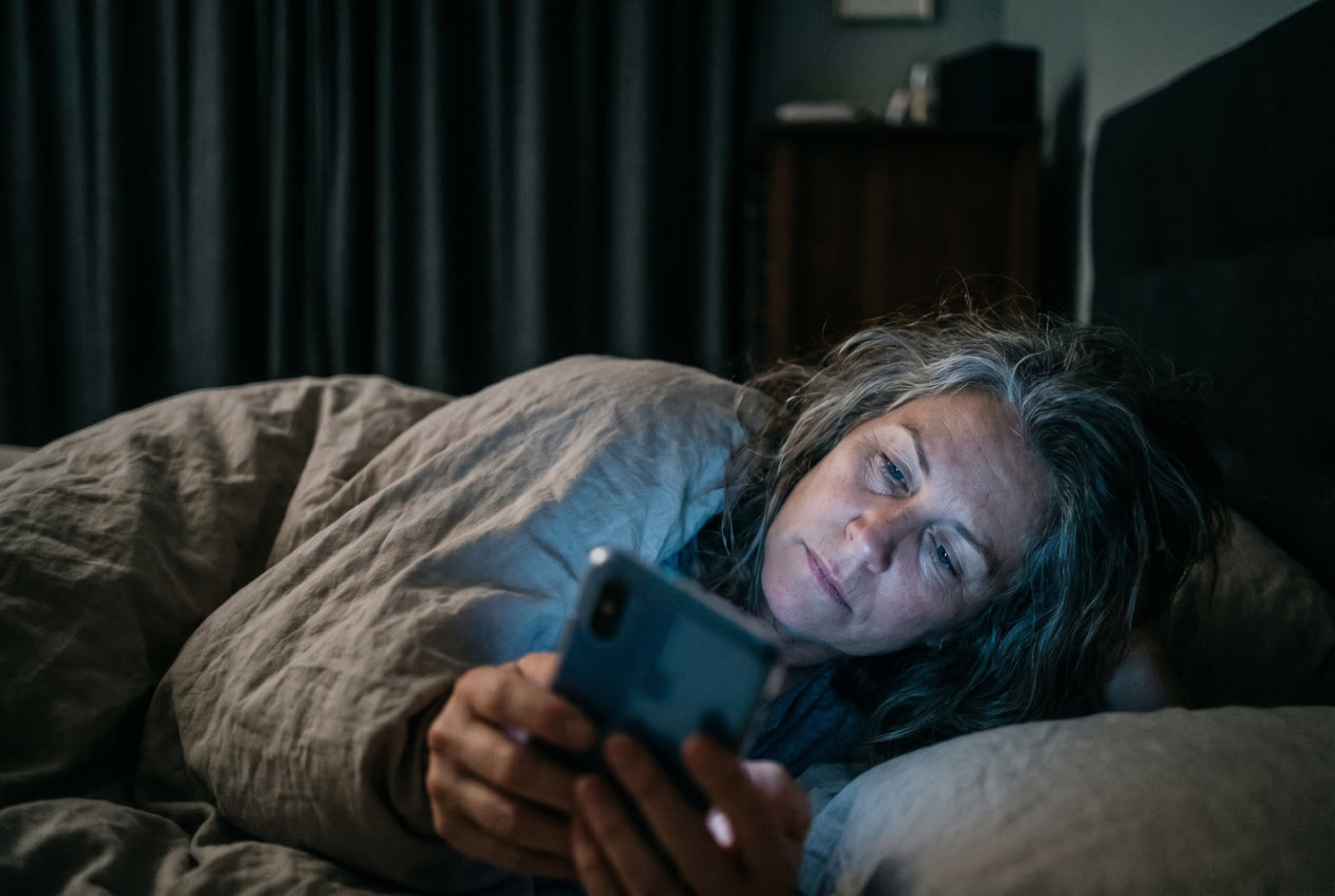
It's not just the light from the screen, though that doesn't help. It's what you're reading. The news, the group chat drama, the property app, the thing your sister-in-law posted — you're feeding your brain urgent, unresolved material at the exact moment you're asking it to power down. It's like doing your tax return in bed and expecting to drift off mid-spreadsheet.
The fix: the phone charges outside the bedroom, full stop. Buy a cheap alarm clock — yes, they still make them — so you lose the "but it's my alarm" excuse. If that feels drastic, start with a rule: nothing with a feed after you're under the covers. Book, podcast, radio — anything that ends.
How fixable: simple to do, harder to stick to, because the phone is engineered to win. The alarm clock is the trick. It removes the negotiation entirely.
5. Sharing a duvet with a human radiator
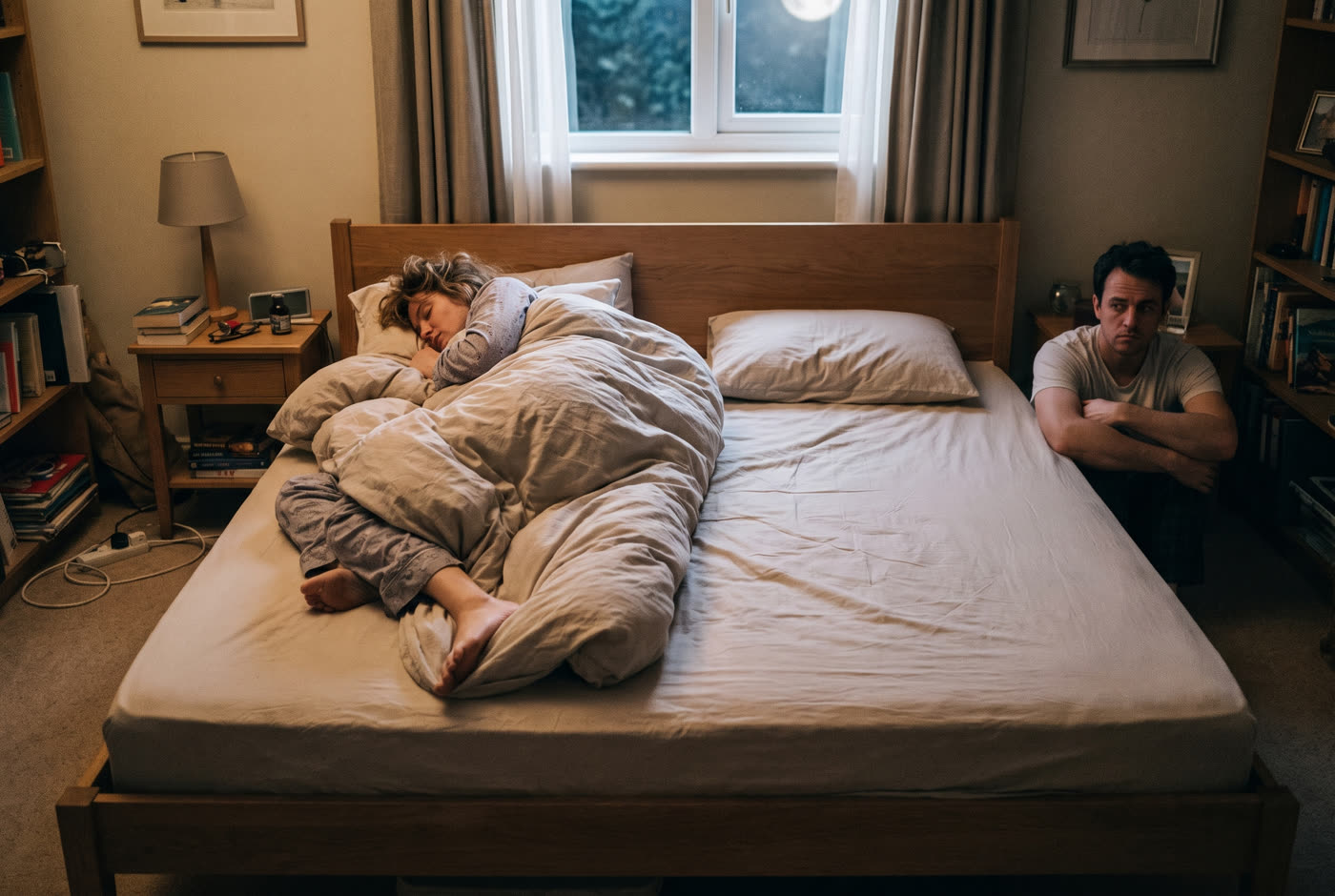
You could run the perfect cool bedroom (see number 2) and still spend the night being slow-roasted by the person you married. Duvet sharing is a compromise nobody actually agreed to: one of you is too hot, one is too cold, and both of you are half-waking every time the other turns over and takes the covers hostage.
The fix: the Scandinavian method — two single duvets on one double bed. It sounds like the end of romance; it's the opposite, because nobody starts the day resentful. Different togs for different bodies, no midnight tug-of-war, and you can still meet in the middle. Separate rooms some nights isn't failure either — it's two people who like each other choosing to actually sleep.
How fixable: practically easy; the hard part is the conversation. Lead with "I love you, but you sleep like a furnace" and go from there.
6. Night sweats

Now we're into the ones you can't fix with a thermostat. Waking soaked at 3am, sheets damp, heart going — night sweats are one of the most disruptive parts of perimenopause and menopause, partly because of the waking and partly because of the twenty minutes of cooling down and sheet-rearranging that follow. And they compound everything above: alcohol, a warm room and a shared duvet all pour fuel on them.
The fix: layered. Sort numbers 2, 3 and 5 first — they're the kindling. Then look at breathable cotton or bamboo bedding and nightwear; when we put twelve menopause products through their paces in We Tested 12 Menopause Products, the cooling ones were among the few that genuinely earned their place. And if sweats are wrecking most nights, that's a conversation with your GP about treatment options, including HRT — it's a legitimate medical issue, not something to soldier through.
How fixable: moderately. Manageable for many; for the rest, help exists.
7. A bladder with opinions
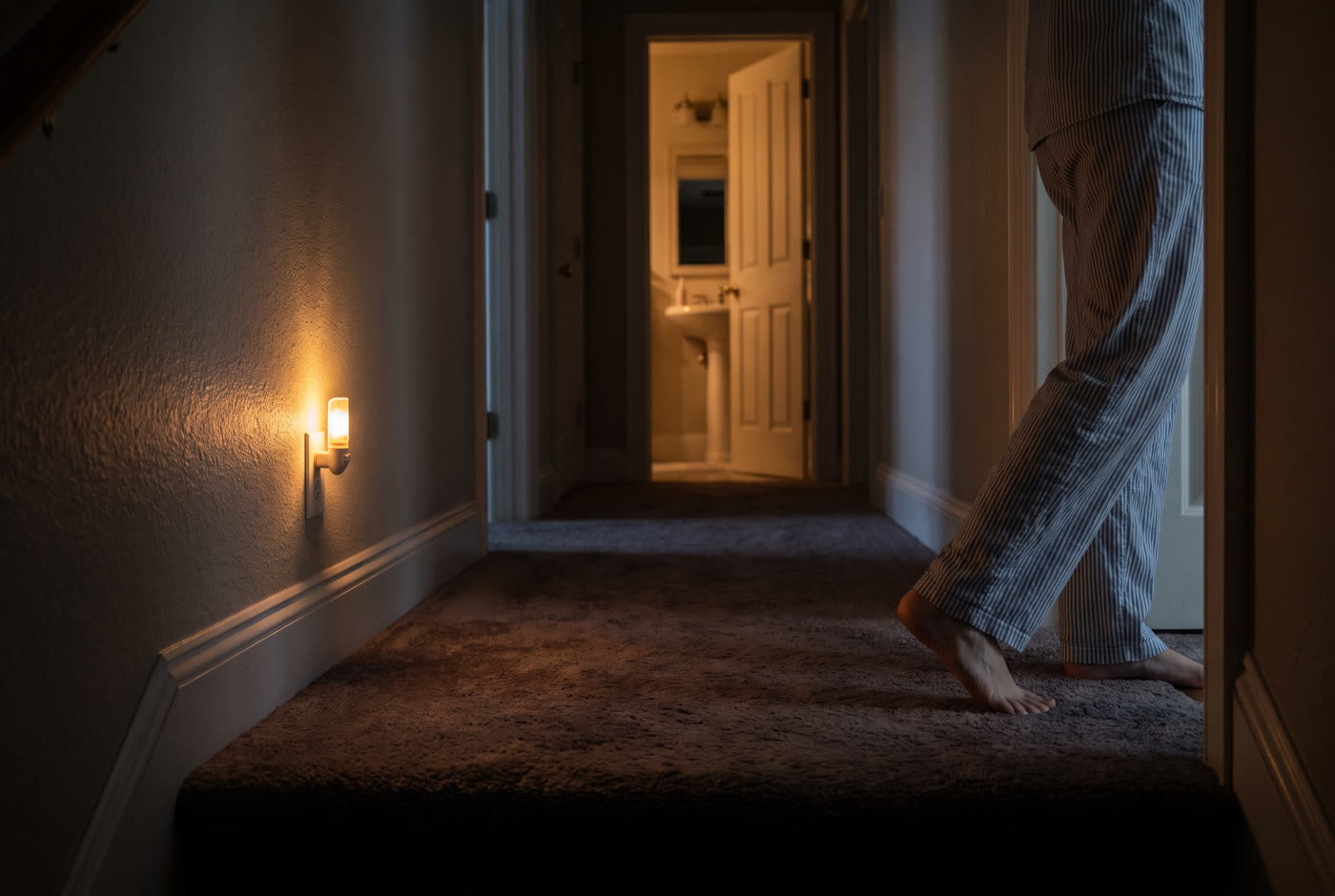
If your bladder now files a formal complaint at 2am and again at 4:30, you're in enormous company. Lower oestrogen affects bladder tissue, pelvic floors have had a long career, and the result is a body that treats a half-full bladder as an emergency. The real thief isn't the loo trip itself — it's what happens after, when your brain decides that since you're up anyway, it might as well start the worry spiral (hello, number 8).
The fix: front-load your fluids — drink normally through the day, then taper after dinner. Watch late caffeine and alcohol, which both irritate the bladder and increase output. Pelvic floor exercises genuinely help and are never too late to start. And if you're going several times a night, or there's urgency or stinging, see your GP — there are effective treatments, including local oestrogen.
How fixable: moderately. Habits help most people; the stubborn cases deserve a professional, not resignation.
8. The 4am worry spiral

You know this one. You wake — a sweat, the bladder, a snore from next door — and before you're even fully conscious, the committee has convened. Money, health, your mother, that email, the thing you said in 2009. At 4am every problem looks unsolvable, because the rational, sort-it-out part of your brain is essentially offline while the alarm system is wide awake. You are not actually facing ruin. You're facing 4am.
The fix: don't lie there hosting the committee. If you've been awake more than twenty-ish minutes, get up, keep the lights low, and do something genuinely dull until sleepy again — it retrains the brain that bed is for sleeping, not board meetings. A notepad by the bed helps too: write the worry down, tell it you'll deal with it at 10am. You usually will, in about four minutes.
How fixable: takes practice, but this genuinely responds to it. If the spiral is nightly and heavy, that's worth a GP chat too.
9. The mattress you bought when Blair was in office
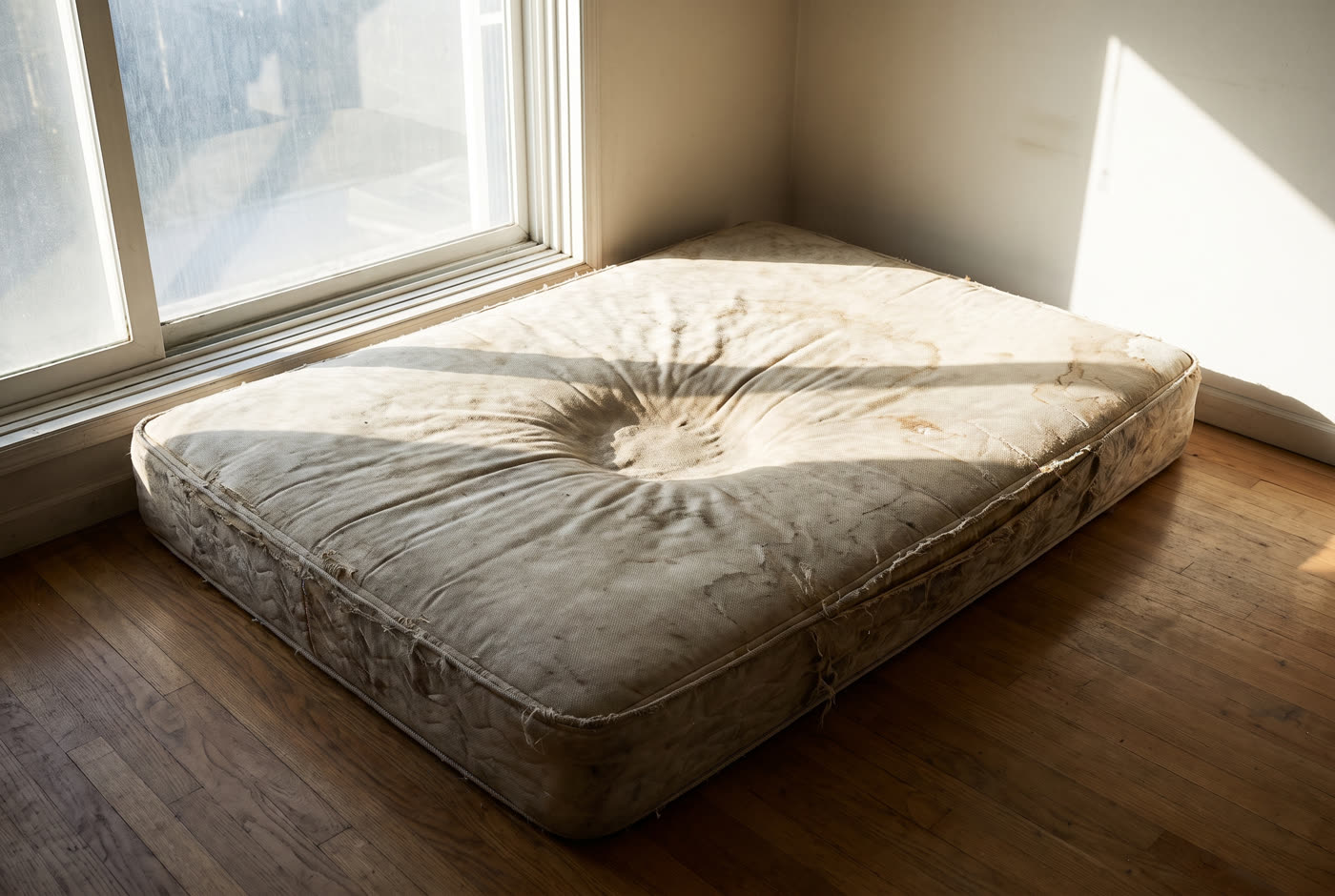
Do the maths quietly and don't panic. A mattress has a working life of roughly a decade, and plenty of us are sleeping on one old enough to vote. The trouble is you can't see the problem — it sagged so gradually you adapted, night by night, into whatever shape it left you. Meanwhile hips and shoulders that were forgiving at 40 have become vocal critics, and every ache is another micro-waking you never remember but pay for in the morning.
The fix: first, the honest test — if you sleep noticeably better in hotels or at your daughter's, your mattress has been named and shamed. Then it's a purchase, and a boring, expensive one, which is exactly why it gets postponed for years. Try before buying, take your actual pillow along, and insist on a proper trial period.
How fixable: simple but costly — hence its position at number 9. Worth every penny per night, though, and you're on it for eight hours a day.
10. Actual sleep apnoea — the one that needs a doctor

This is the one we're not going to be breezy about. If you snore heavily, if a partner has heard you stop breathing or gasp in the night, and if you're exhausted during the day no matter how long you were in bed — that pattern has a name, and it's worth taking seriously. Sleep apnoea is underdiagnosed in women, partly because we're less likely to be the "classic" picture and partly because midlife tiredness gets waved away as hormones, stress, or just life. After menopause, the risk quietly rises. Untreated, it doesn't just steal sleep — it matters for your heart and blood pressure too.
The fix: this isn't a bedding tweak. Book a GP appointment, describe the snoring-gasping-exhaustion pattern plainly, and ask whether a sleep study makes sense. Treatment exists and it transforms lives.
How fixable: very — but only via that appointment. Make it this week. This is your second act; you should be awake for it.
One warm email, no lavender-scented nonsense
If this list found you at 4am — first of all, hello, put the phone down after this paragraph (see number 4, we're watching). Start with the easy wins at the top, give each change a fortnight, and don't try to fix all ten at once. Nobody has that kind of energy at any age.
And if you'd like more of this — honest, tested, plain-talking help with the stuff nobody warns you about — we send one genuinely-worth-opening email a week. What actually works, what to skip, and no hype anywhere near it. Join Her Honest Review — it's free. →
Written and edited by our team. See our Editorial Standards. This article is general information, not personal medical advice — for anything worrying you, your GP is the right first call.
Keep the honest ones coming
Get the next tested review in your inbox
No hype, no spam, no brand paid to be here — just what actually works, from women who tried it first.
Keep reading
All Menopause →
Menopause✓ Tested
The 9 Best Products for Hot Flashes — Tested by Women Over 50
You know the drill. You're mid-sentence, mid-meeting, or three-quarters asleep, and suddenly your body decides it's July on the surface of the sun. The sheets are damp, the cardigan comes off, and…

Menopause
What No One Told Me About HRT — One Woman's Story
I want to tell you the thing I most needed to hear at 51, sitting in my car in a pharmacy parking lot, holding a paper bag with my first-ever patch of estrogen in it and crying like I'd just been…

Menopause
Is Black Cohosh Worth It for Hot Flashes? We Asked an OB/GYN
You've seen it. The little brown bottle on the pharmacy shelf, the one your friend swears "changed everything," the one an ad promised would melt your hot flashes away like ice on a July sidewalk…