Mindset
11 Habits of Women Who Reinvented Themselves After 50
We keep meeting women whose second act is the best one. These are the eleven habits they have in common — none of them require a retreat in Bali.

We keep meeting women whose second act is quietly the best one. When we looked closely, they weren't lucky, rich, or fearless — they just did the same eleven small things, over and over.
Here's something we've noticed, and we can't unsee it. In the course of doing this job — interviewing women for reviews, reading your emails, chatting in the comments — we keep meeting women whose lives got noticeably bigger after 50. The teacher who took early retirement and now sells her pottery at maker's markets. The reader who was widowed at 54 and, two years later, wrote to us from a bench halfway along the South West Coast Path. The office manager who retrained as a counsellor at 57 and says she's finally doing the job she was always meant to do.
And when you ask them how — expecting a lottery win, a guru, or at minimum a very understanding husband — they all shrug and describe the same handful of unglamorous habits. No vision boards, no ice baths, nobody "crushing it". Just small, repeatable things that any of us could start this week. So we wrote them down. Here they are.
1. They stopped waiting to feel ready

Here's the habit underneath all the other habits: these women start things while still feeling unqualified. The reader who opened her alterations business at 56 told us she felt like a fraud right up until the third paying customer — and then she was simply a woman with a business. Waiting to feel ready is a lovely idea, but readiness, it turns out, mostly arrives after you begin, not before. The confident-seeming woman at the evening class isn't braver than you; she just enrolled anyway. Start this week: pick the thing you've been circling — the course, the enquiry email, the "do you still need volunteers?" phone call — and do the first clumsy version of it before Sunday. Not the whole thing. The first ten minutes of it.
2. A morning hour that belongs to no one else
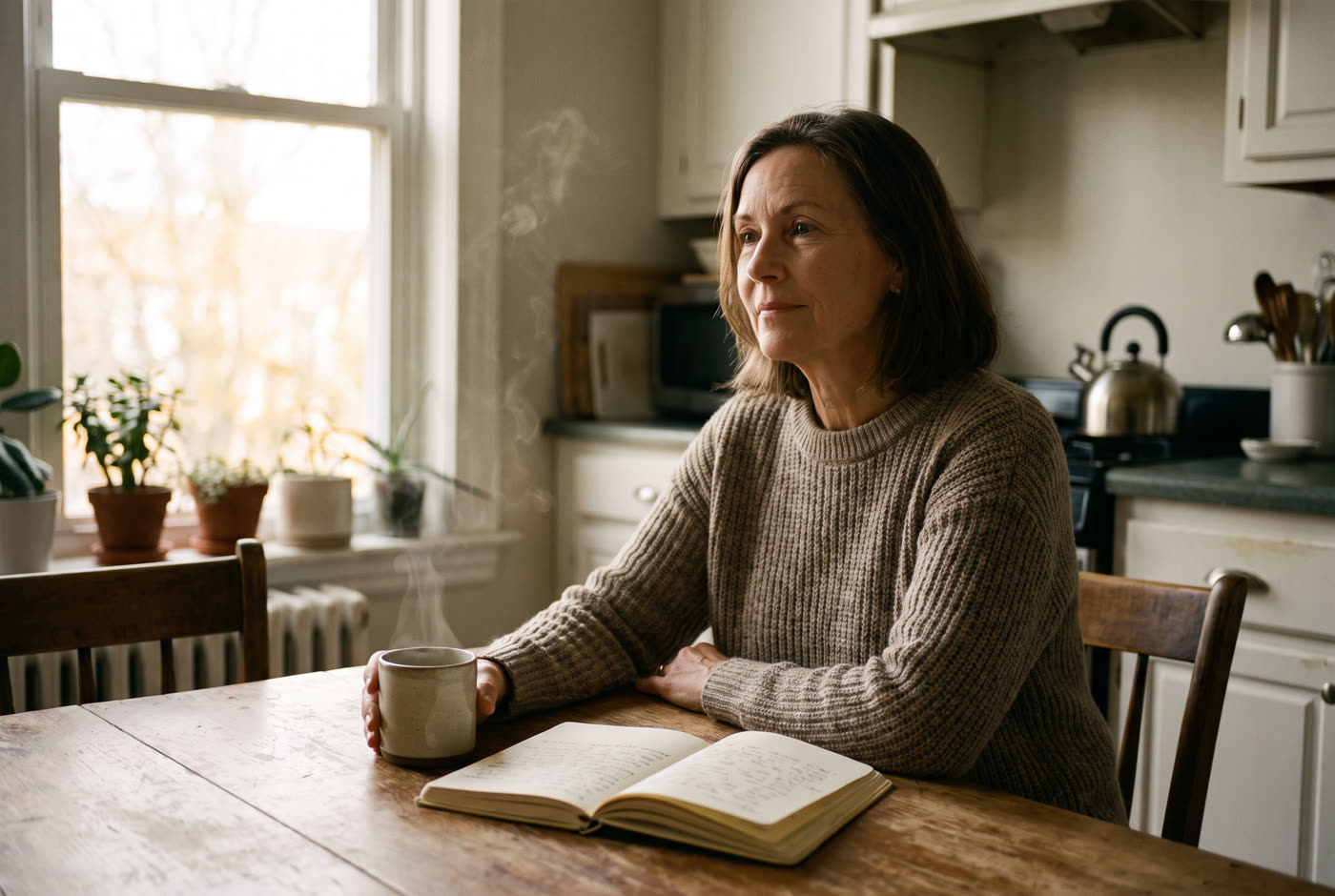
Nearly every woman we spoke to had carved out some version of this: an hour, early, before the day starts making its demands. Not for emptying the dishwasher or answering anyone's messages — for her thing. One reader writes her novel from 6 to 7am at the kitchen table, longhand, tea going cold beside her. Another does her physio stretches and then just sits in the garden, which she describes, without apology, as "the whole point of the hour". The magic isn't the earliness. It's the ownership — a daily, physical reminder that your life is not entirely a support service for other people's. Start this week: claim tomorrow's first hour. Tell the household it's spoken for. It will feel strange for about four days, and then it will feel like yours.
3. They walk, daily, outside, in actual weather

Not a step count. Not Lycra. A daily walk, out the front door, in whatever the sky is doing — which, this being Britain, builds character quickly. The women who'd reinvented themselves were almost comically consistent about this one. One told us her entire career change was "decided on the same circuit of the park, one lap at a time, over about four months". There's something about walking that untangles thinking in a way sitting and fretting never does — problems seem to sort themselves into an order out there. And it's the cheapest habit on this list by a mile. Start this week: twenty minutes, same time each day, rain accepted. Don't bring a podcast every time. Some walks should be just you and the weather, working things out together.
4. One hard new thing at a time
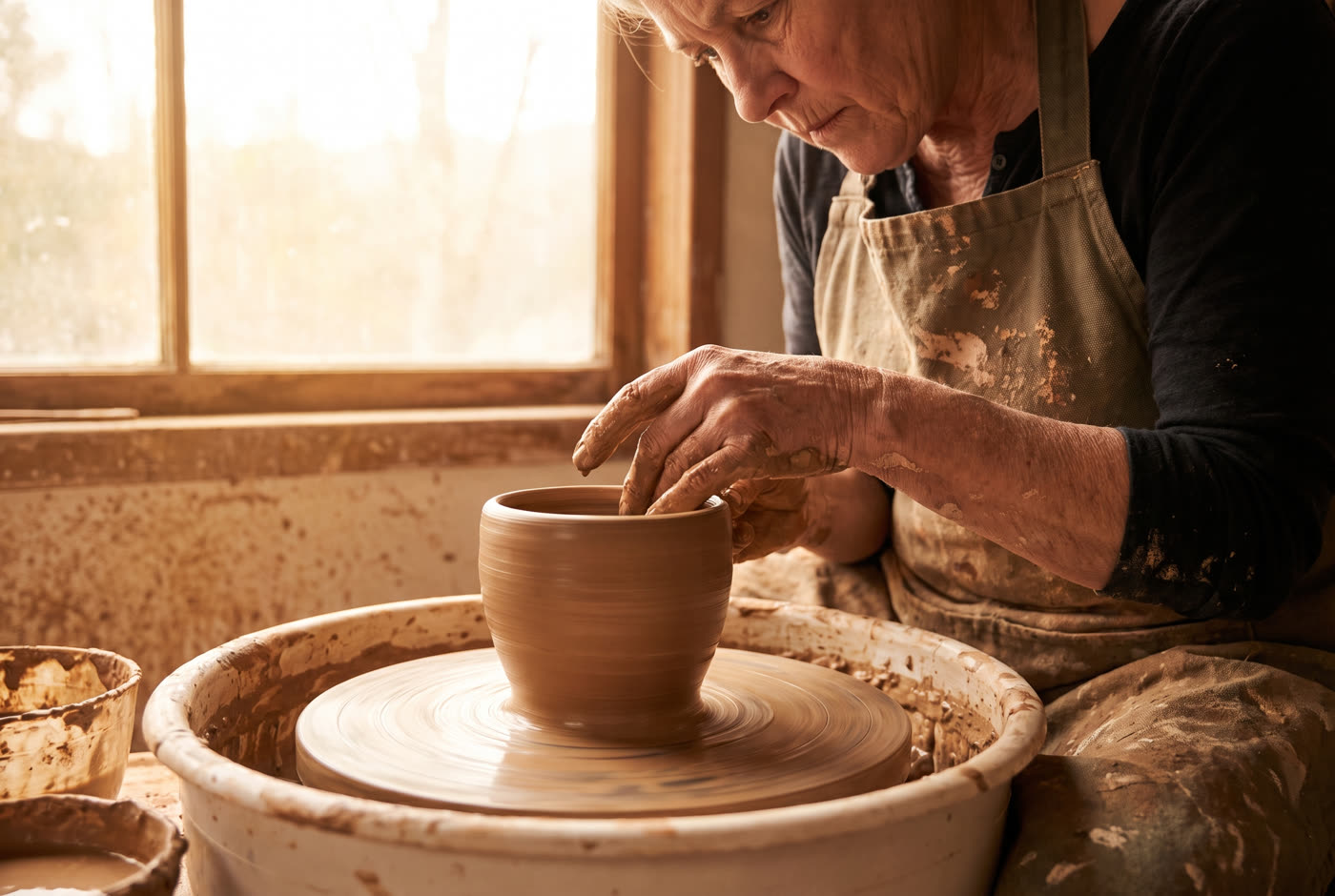
This surprised us. We expected the reinventors to be juggling five projects. Almost none were. They picked one genuinely difficult new thing — Italian, wild swimming, a bookkeeping qualification, the grade 3 piano exam abandoned in 1979 — and stayed with it past the humiliating stage, which is the stage where most of us politely leave. A reader learning the cello at 58 put it perfectly: "I sounded like a dying goose for a year. Then one day I didn't." The habit isn't collecting hobbies. It's tolerating being a beginner, on purpose, until you're not one. That tolerance, once built, transfers to everything else. Start this week: choose one thing you'd love to be good at in two years, and book the first lesson. Just the one thing. The others will wait their turn.
5. Friendship maintenance, scheduled like dental care
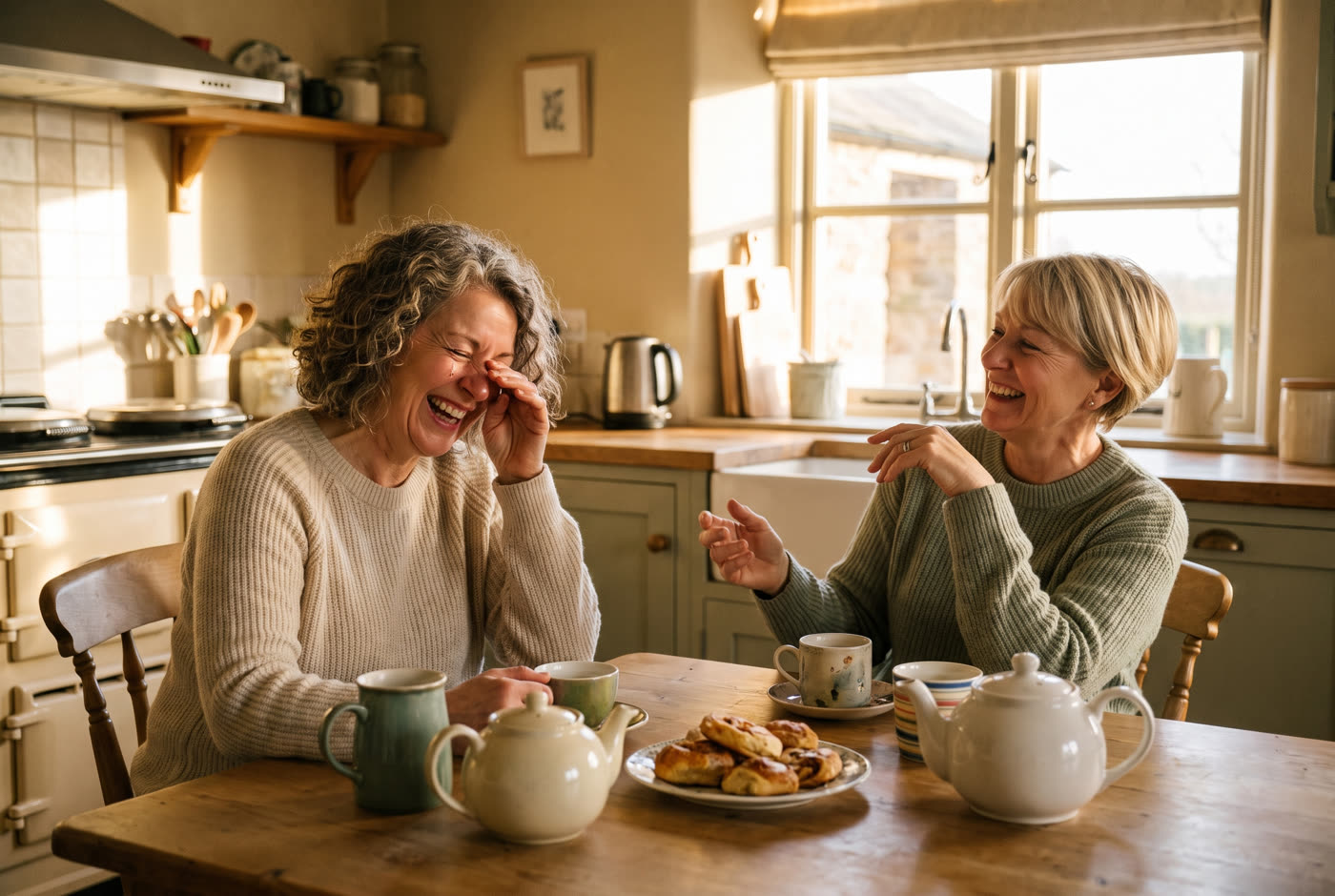
The women thriving in their second act do not leave friendship to chance, because they've watched what chance does to it. They put it in the diary: the first-Thursday supper club, the standing Saturday walk, the monthly phone call with the friend in Aberdeen that happens whether or not anyone has news. One reader and her two oldest friends book next year's weekend away while on this year's — "otherwise it quietly becomes never". It sounds unromantic, scheduling your people like a check-up. But the scheduled friendships were the ones still standing at 60, and the "we must get together soon!" ones mostly weren't. Start this week: take your two most drifting friendships and put a real date against each — in the diary, invitation sent, before you close this article.
6. They ask out loud for what they want

Somewhere along the way, these women stopped hoping to be offered things and started requesting them, in plain words, without the softening waffle. The four-day week. The market stall next to the entrance, not behind the burger van. "I'd like to be considered for that." One reader, at 61, asked her employer to fund a coaching qualification — out loud, in an actual meeting, heart thumping — and got it, along with the discovery that nobody fainted. Decades of being the accommodating one train you to treat your own wants as slightly embarrassing luggage. The reinventors just... stopped. Worst case, someone says no, and you're precisely where you were. Start this week: name one thing you've been hoping someone will notice you deserve, and ask for it in one clear sentence.
7. A monthly money date with themselves

Not a spreadsheet empire. One hour, once a month, with a cup of coffee and the actual numbers: what came in, what went out, what the pension is doing, what the plan costs. The women who changed their lives all knew their numbers cold — because reinvention is usually a maths problem before it's a courage problem. The reader who left her council job to start a garden-design business didn't leap; she spent fourteen money dates working out exactly how small a first year she could survive, and then leapt that far. Knowing the real figure is calming, even when the figure is rude. It's the not-knowing that keeps you stuck. Start this week: book your first one. One hour, this Sunday, coffee mandatory. Just look at everything. That's the whole assignment.
8. Boundaries without a three-paragraph apology

You can tell a woman in her second act by the length of her no. "I can't take that on." "That doesn't work for me." Full stop — no essay about how terrible she feels, no invented dentist. One reader told us her turning point was realising she'd spent thirty years writing apology paragraphs for things that needed none, "as if declining to host Christmas were a criminal offence requiring a defence statement". The habit isn't becoming hard or unkind — these were some of the warmest women we've met. It's grasping that a clean, friendly no protects the yeses that matter, and that the sky stays up. People adjust much faster than you'd think. Start this week: next request you want to decline, allow yourself one sentence. Warm tone, no reasons. See how it lands.
9. They dress for the woman they are now

Not the woman from 1998 whose jeans are in the loft "for when", and not the invisible beige everyone seems to assume comes free with a bus pass. The reinventors had, at some point, done a ruthless edit: cleared out the clothes belonging to previous versions of themselves and dressed the current one properly — the red coat, the good boots, the lipstick that means business. One reader called it "resigning from the witness protection programme". It's not vanity and it's certainly not about youth. It's alignment: when the outside matches who you actually are now, you stop flinching at shop windows and start walking into rooms differently. Start this week: try everything in one drawer. Whatever belongs to a former you, thank it and let it go. Wear the good thing to the supermarket.
10. Rest they haven't "earned"
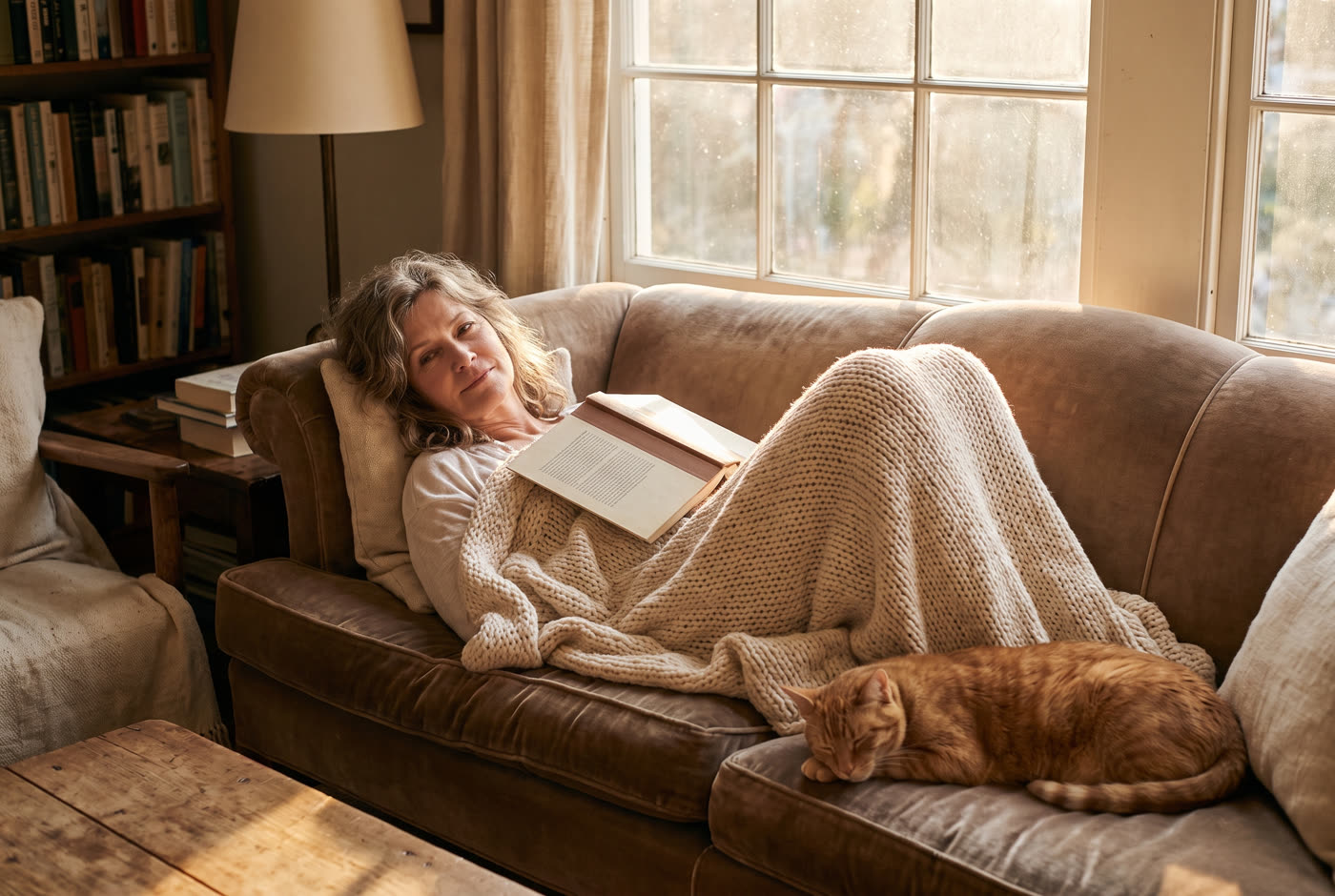
Most of us treat rest as a wage — payable only after sufficient suffering, and even then taken guiltily, half-listening for someone needing us. The women who rebuilt their lives had quietly torn up that contract. They rest before they're exhausted: the Sunday afternoon that is nobody's, the novel read at 3pm on a weekday with the phone in another room, the early night taken simply because bed is nice. One reader keeps what she calls a "closed sign" — one afternoon a week when she is, in her words, "not available to be useful". It's not laziness; it's maintenance. You cannot build a second act on an empty battery, and no one is coming to schedule your recovery for you. Start this week: put one unearned, undefended rest block in the diary and guard it like a flight you've paid for.
11. A done list, not just a to-do list
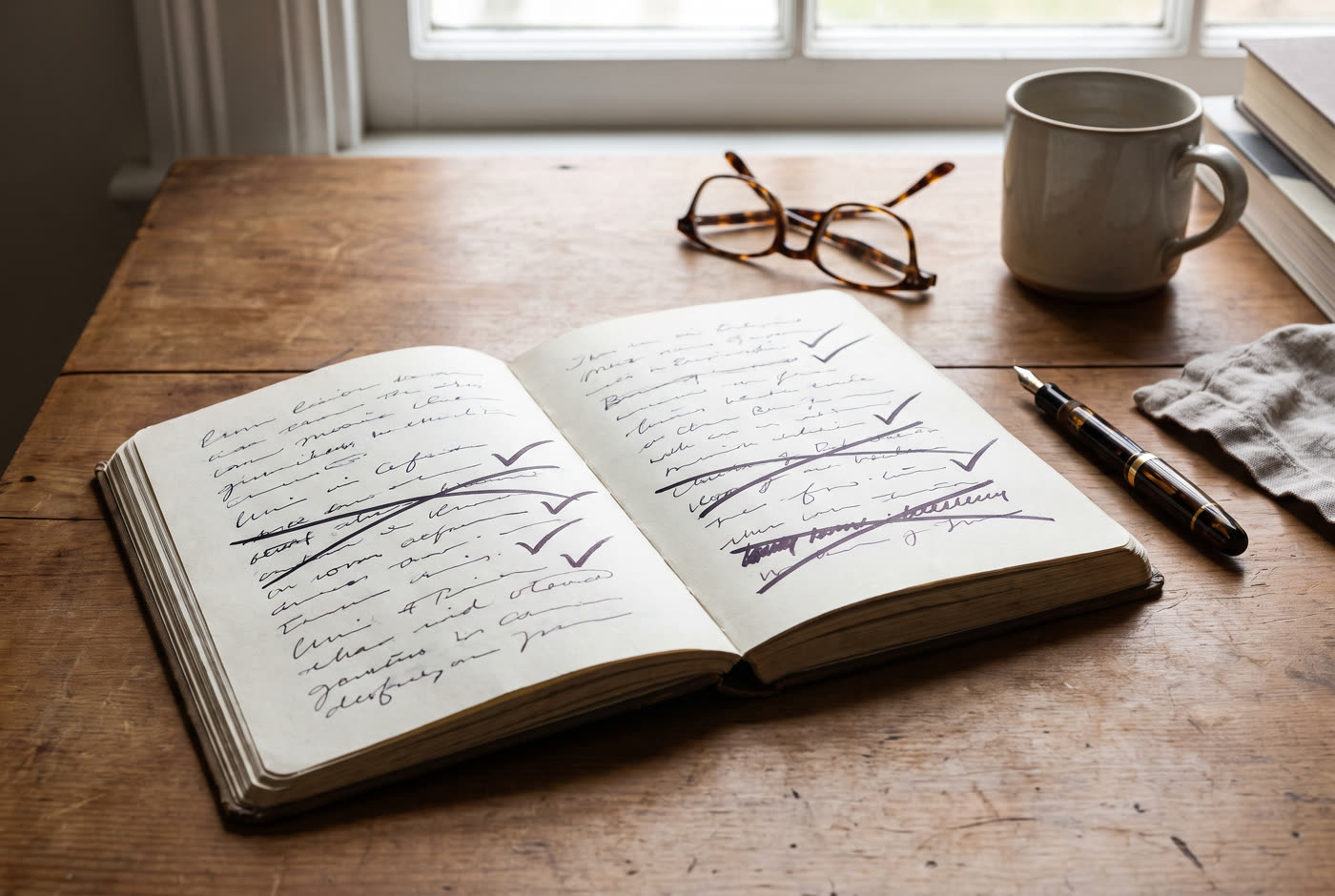
The to-do list is immortal — cross off six things and it grows four more overnight, like a hydra with stationery. So the reinventors keep a second list: at the end of the day, or the week, they write down what they actually did. Walked every day. Sent the scary email. Survived the first pottery class without crying (much). One reader keeps hers in a cheap notebook and rereads it every New Year's Eve — "it's the only honest record I have of how far I've come". It sounds twee. It isn't. Reinvention happens in increments too small to feel, and the done list is how you catch yourself in the act of changing. Start this week: tonight, before bed, write down three things you did. Watch what a fortnight of that does to your nerve.
The quiet secret of all eleven
Read the list back and notice what's missing: no grand gesture, no personality transplant, nothing that requires savings, permission, or a retreat in Bali. Every woman we've described started exactly where you are — mid-life, mid-laundry, mildly sceptical — and simply began doing one or two of these things on ordinary Tuesdays. The reinvention crept up on her afterwards, the way spring does.
So don't attempt all eleven. Pick the one that made something in your chest go ah. That's the one. Start it this week, badly if necessary, and let the done list catch the evidence.
Which habit are you starting — and which one have you already been doing for years without giving yourself credit? Tell us in the comments. We read every one, and the best reader stories have a habit of ending up in our next piece, with your name on them.
Loved this? We send one warm, genuinely-worth-opening email a week — real talk about the second act, honest reviews the marketing won't give you, and stories from readers who did the scary thing anyway. Join Her Honest Review — it's free, and there's no hype. →
Written and edited by our team. See our Editorial Standards.
Keep the honest ones coming
Get the next tested review in your inbox
No hype, no spam, no brand paid to be here — just what actually works, from women who tried it first.